Choose the anchor, then choose the scale
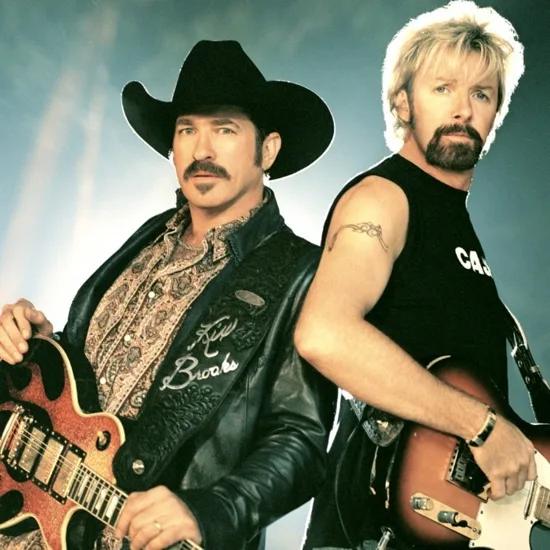
Begin with the concert you actually want to attend: venue, date, admission and the people travelling. A Dierks Bentley amphitheatre night, a Kacey Musgraves arena visit and a Brooks & Dunn weekend can call for different transport and lodging decisions. The name of the artist does not tell you where the venue sits relative to the city centre.
Decide how much of a trip you want before collecting attractions. A concert with one overnight stay can be satisfying without a full sightseeing programme. Write the performance into the planner first, using only published times. Then mark the departure and return commitments. Everything else should fit around those anchors, including the amount of rest that makes the evening enjoyable.
Use Day One to arrive and get oriented
The first day works best when it has one main purpose: get everyone to the destination with enough energy for the music. Add the arrival location, lodging address and check-in arrangement as separate pieces of information. A hotel’s advertised check-in time does not guarantee that an earlier arrival can use the room. Ask about luggage storage if that affects your plan rather than building the afternoon around an assumption.
Choose an optional activity close to the places you already need to visit. A café, a neighbourhood walk or a small record-shop stop can be easier to adjust than a second timed booking. Label it optional in the notes. If the journey runs late, you should be able to remove that activity while keeping the meal, venue arrival and performance intact. A flexible plan has an obvious first thing to drop.
A two-day weekend with breathing room
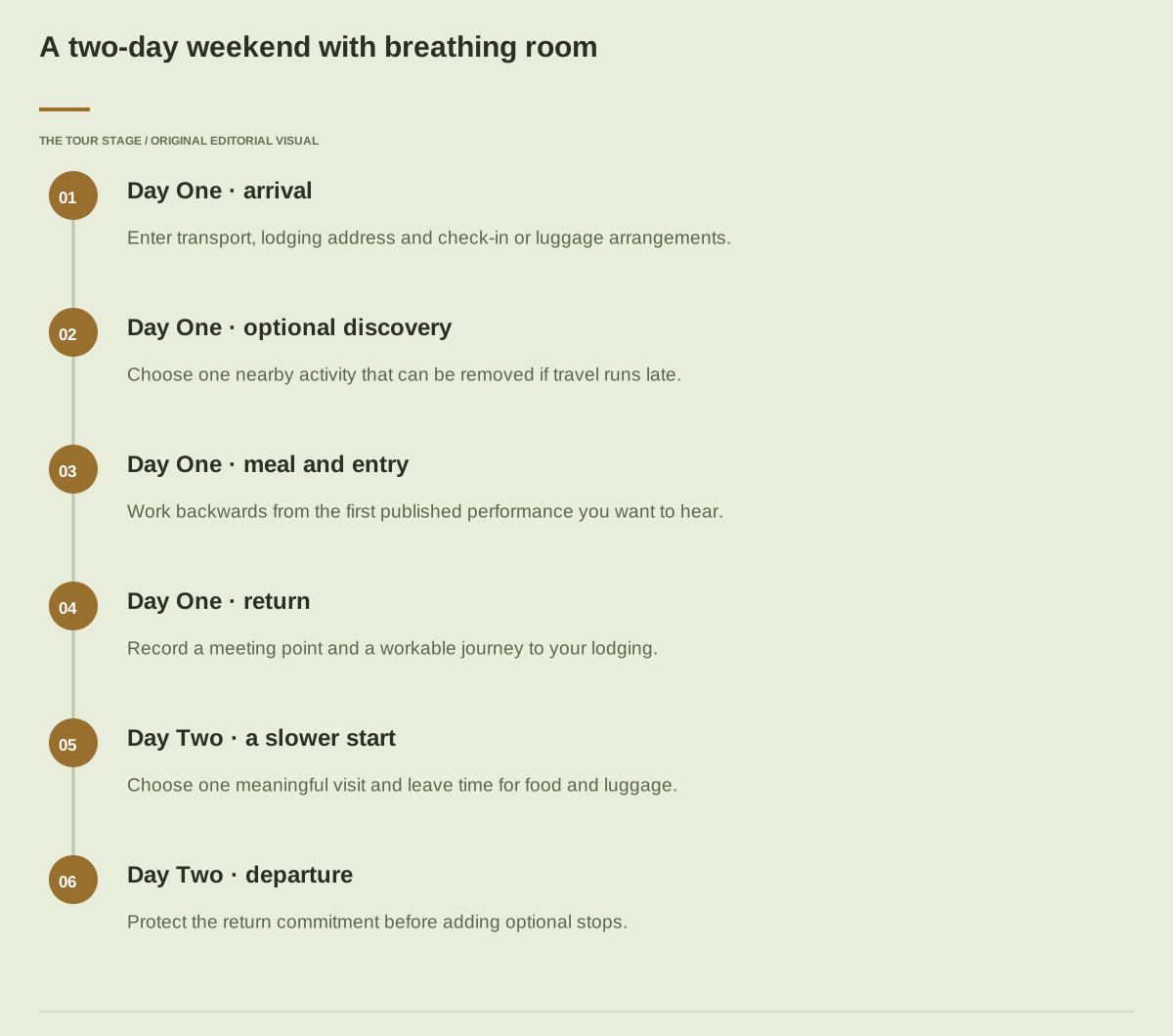
- Day One · arrivalEnter transport, lodging address and check-in or luggage arrangements.
- Day One · optional discoveryChoose one nearby activity that can be removed if travel runs late.
- Day One · meal and entryWork backwards from the first published performance you want to hear.
- Day One · returnRecord a meeting point and a workable journey to your lodging.
- Day Two · a slower startChoose one meaningful visit and leave time for food and luggage.
- Day Two · departureProtect the return commitment before adding optional stops.
Read the visual as text
- Day One · arrivalEnter transport, lodging address and check-in or luggage arrangements.
- Day One · optional discoveryChoose one nearby activity that can be removed if travel runs late.
- Day One · meal and entryWork backwards from the first published performance you want to hear.
- Day One · returnRecord a meeting point and a workable journey to your lodging.
- Day Two · a slower startChoose one meaningful visit and leave time for food and luggage.
- Day Two · departureProtect the return commitment before adding optional stops.
Research the actual route between places
Nashville offers a useful example of why place names matter. The Ryman maintains its own directions, parking and transport page; it also publishes a separate accessibility resource.12 Use the address of the venue you are attending, not a generic pin for Nashville or a similarly named music attraction.
For an airport arrival, WeGo identifies Route 18 as the connection between Nashville International Airport and the downtown transit centre.3 That establishes a public-transport option, not the correct departure time for your flight or hotel. Open the current route schedule and check the direction, travel date and onward connection. In any destination, record both legs of the journey. A straightforward trip to the concert does not prove that the same service runs after it finishes. Keep a backup return option you understand.
Work backwards from the first music you want to hear
Write down doors, the published performance time and any verified support information as separate entries. Then place the meal and the journey before them. Avoid inventing a headliner time by copying a previous city’s fan report. If a venue has not supplied an exact running order, use the information it has published and leave a buffer rather than filling the gap with a confident guess.
A meal near the venue can simplify the evening, but proximity alone does not remove the need for time. Consider the walk, accessibility of the route, payment and the possibility that the restaurant is busy. Choose a booking that can end comfortably before entry. The opening-act guide explains the discovery value of arriving for the earlier performance; the mobile-ticket explainer helps prepare the admission side.
Give the journey home its own block
The return deserves the same attention as the arrival. Save the lodging address and the planned station, pickup location or car park. Agree on a group meeting point that does not depend on everyone standing in the same crowd after the encore. If people are leaving separately, decide how they will communicate changes and who needs to know that everyone is back.
Do not attach a hard booking immediately after an estimated concert finish. An event can end differently from your expectation, and leaving a large venue takes time. If a last transit departure is essential, make that constraint visible in the planner before buying the rest of the trip. Sometimes the workable answer is a different hotel, a different return method or another date. The best plan is one the whole group can carry out without relying on a perfect sequence of minutes.
Keep Day Two lighter than Day One looks on paper
After a late night, a slower breakfast and one chosen visit can be more rewarding than an ambitious circuit. Pick the activity that adds something to the concert experience: music history, a neighbourhood connected with the sound or simply time to discuss the show. Nashville’s official visitor planning resources provide categories for accommodation, neighbourhoods, attractions and transport, making them useful starting points for a focused choice.4
Check opening hours, admission and travel requirements directly for the place you choose. Put the return journey into the plan before the optional visit so that a museum or tour does not quietly consume the departure buffer. Leave space to collect luggage and have a meal. Day Two should close the weekend comfortably, rather than turn the last hours into an attempt to recover every idea omitted from Day One.
Make the worksheet specific enough to use
Each activity needs a date, a time when known, a name and practical details. “Dinner” is a useful starting label; a reservation name, address and cancellation deadline make it actionable. For transport, include the destination and the relevant booking reference in a private copy. For venue entry, note which person holds each ticket and whether a transfer still needs attention.
Use the trip-notes area for shared decisions: a fallback meal, a meeting point, an access arrangement already confirmed with the venue or an expense that one person pays upfront. Avoid recording sensitive identification or payment credentials in a plan you intend to distribute. The festival budget calculator can also support a concert weekend when you enter your own costs, but its equal-share estimate should be kept separate from any unequal spending agreement among friends.
Save, print and review the plan together
The planner supports saving on this device, printing and downloading the entered plan as JSON. It does not book transport, reserve a table, send messages or create calendar reminders. Treat it as a clear working document and carry any actual tickets or confirmations through the method required by their providers. A printed summary can be helpful when a phone battery is low, but it does not replace a mobile entry credential.
Review the plan once with the people travelling. Confirm the fixed commitments, the first optional activity to drop and the return arrangement. Then recheck official event and travel information close to departure. A useful itinerary gives everyone enough shared detail to relax while leaving room for a record discovered in a shop, a good conversation after the show or an extra hour of sleep.
Sources & further reading
- Ryman directions, parking and transportVenue-specific route-planning resource.
- Ryman accessibilitySeparate access guidance and booking information.
- WeGo: Nashville airport serviceRoute 18 airport–downtown connection; current timetables remain essential.
- Visit Music City: trip planningOfficial destination categories for a music weekend.