Clothes work at the scale of a stage
A stage costume must communicate across a room, through a photograph and sometimes through a television camera. Sparkle catches changing light; an embroidered motif can give a performer a personal emblem; a silhouette can remain recognisable even when the audience cannot see a face clearly. These are practical and theatrical functions, not simply evidence of extravagance. Country’s visual history includes homemade clothing, specialised Western tailoring, plain suits, elaborate dresses and deliberate reinventions of familiar forms. No one garment defines the genre. The Country Music Hall of Fame’s Suiting the Sound exhibition provides an object-based way to explore this history.1 Look at the maker, wearer and documented occasion before deciding what a costume means. The same design can convey pride, humour, glamour or historical quotation in different settings.
The rodeo tailor is an author of the image
The museum’s tailoring history distinguishes makers including Nathan Turk, Nudie Cohn, Manuel Cuevas and Jaime Castaneda.1 Their work should not disappear behind the generic phrase “Nudie suit.” That label is often used loosely, but an accurate caption identifies the actual maker when the evidence allows it. Embroidery, stone placement and the cut of a jacket can be as distinctive as an instrumental arrangement. Tailors also collaborate with performers rather than merely applying a standard country uniform. A garment can refer to a song, a regional identity or a deliberately constructed stage character. When a maker is unknown, say so. Attributing every decorated Western suit to the best-known tailor turns a rich craft history into a single brand and obscures the skilled people who made the objects.
Read the object, credit the maker
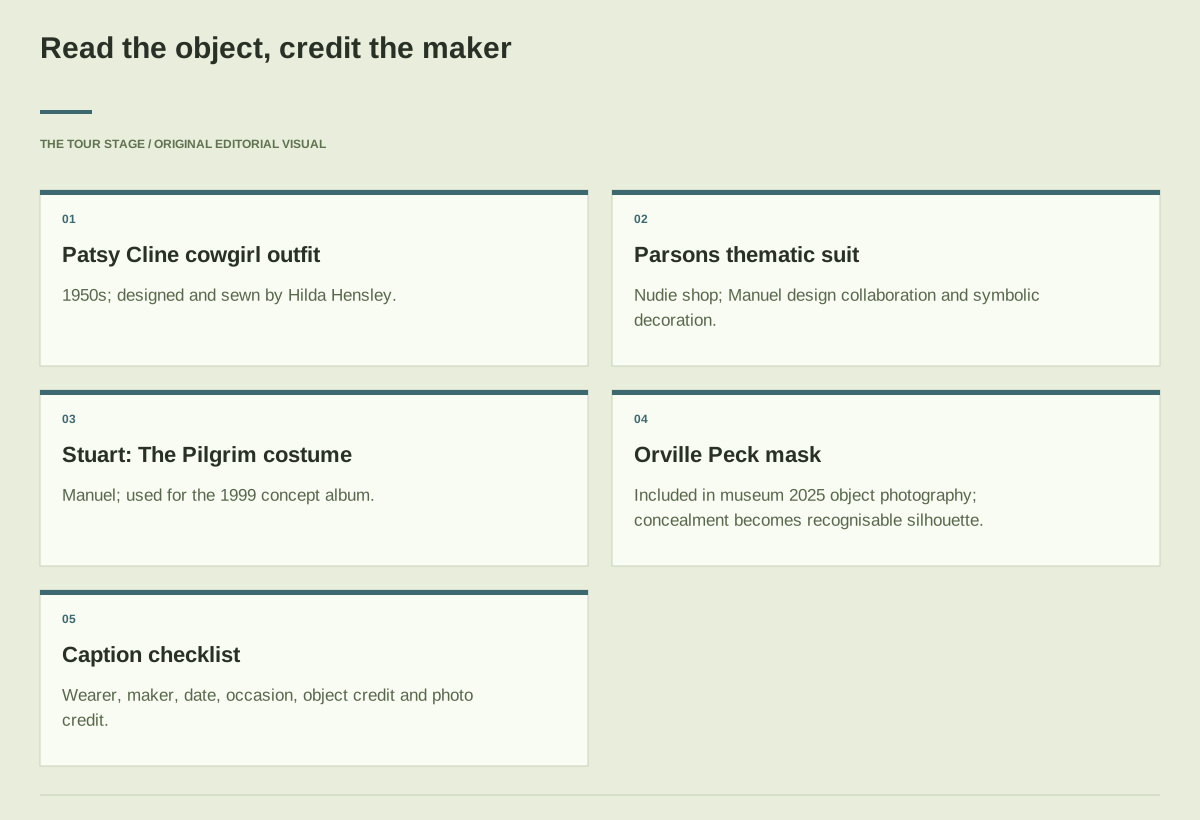
- Patsy Cline cowgirl outfit1950s; designed and sewn by Hilda Hensley.
- Parsons thematic suitNudie shop; Manuel design collaboration and symbolic decoration.
- Stuart: The Pilgrim costumeManuel; used for the 1999 concept album.
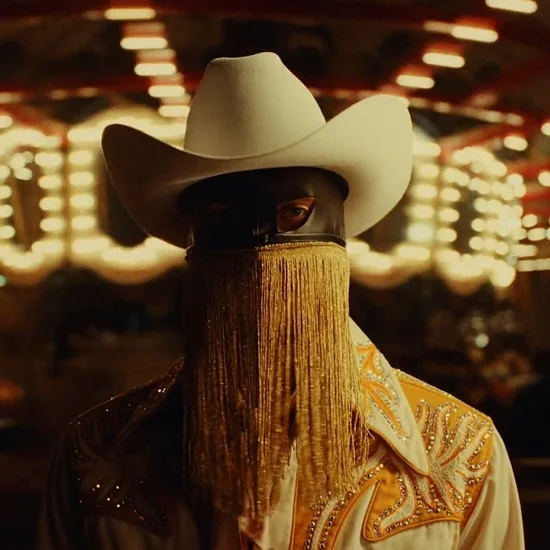
- Orville Peck maskIncluded in museum 2025 object photography; concealment becomes recognisable silhouette.
- Caption checklistWearer, maker, date, occasion, object credit and photo credit.
Read the visual as text
- Patsy Cline cowgirl outfit1950s; designed and sewn by Hilda Hensley.
- Parsons thematic suitNudie shop; Manuel design collaboration and symbolic decoration.
- Stuart: The Pilgrim costumeManuel; used for the 1999 concept album.
- Orville Peck maskIncluded in museum 2025 object photography; concealment becomes recognisable silhouette.
- Caption checklistWearer, maker, date, occasion, object credit and photo credit.
Nudie Cohn: decoration becomes a public language
The museum’s Cohn materials connect his shop with the highly embellished stage costumes associated with mid-century country stardom. They also describe the thematic suit developed for Gram Parsons with Manuel, then the shop’s head designer.2 That example is useful because decoration does more than signal expense. Images on a suit can form a miniature narrative, making a performer’s tensions or influences visible. View the whole silhouette first, then individual motifs, then the placement of those motifs on the body. A design that reads clearly in a publicity photograph may work differently when the singer moves. Do not assume the imagery is a straightforward record of private belief. Stagewear can be theatrical, ironic or deliberately contradictory. Its documented commission and use are better starting points than an invented psychological explanation.
Manuel and Marty Stuart: history made personal
Manuel’s museum oral history documents his work for many country and popular performers, while the tailoring exhibition identifies the costume made for Marty Stuart’s 1999 album The Pilgrim.34 Stuart’s use of historic country clothing is not simply an attempt to freeze one era. A consciously chosen older visual language can become a way to make a new work recognisable as part of a continuing tradition. Notice how colour, ornament and the stance of a musician work together in an album image. The wearer is a collaborator in the effect. The museum’s later acquisition of Stuart’s extensive collection also shows that stagewear survives as evidence: a garment can carry performance history long after the tour ends.5 Its seams, wear and repairs belong to that history alongside its decorative front.
Patsy Cline: handmade work belongs in the story
The museum’s Stuart collection photographs identify a 1950s cowgirl outfit designed and sewn for Patsy Cline by her mother, Hilda Hensley.6 This object changes the frame from celebrity luxury to family labour and the making of a public identity with available skills. A handmade garment can be visually assertive and carefully designed without passing through a famous commercial shop. It also reminds us that a finished stage image has contributors who may never appear in the artist credit. Compare the outfit’s shape and ornament with a tailored male Western suit. What is shared, and what follows a different convention? Such a comparison can illuminate the visual expectations placed on women performers without suggesting that every woman accepted or resisted those expectations in the same way.
Shania Twain: an era can have several visual settings
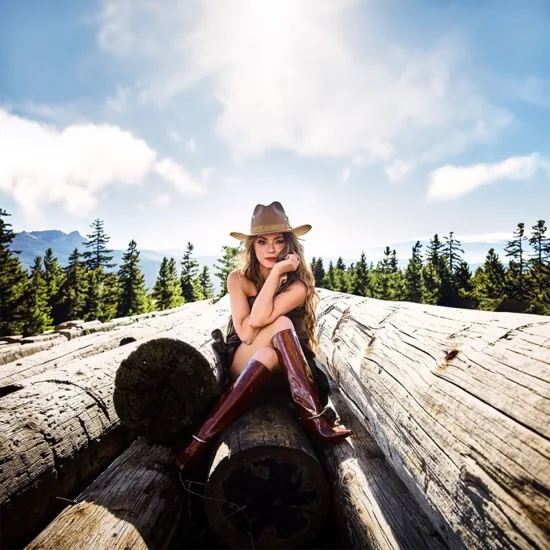
Shania Twain’s museum teaching resources use her career as a route into image-making, musical change and performance history.7 Compare an official video image, an album portrait and a live photograph from the same broad period. They serve different purposes: a video can build a character and setting, an album cover can hold a single symbolic pose, and stage clothing must function during movement. It is misleading to call every memorable outfit a tour costume. Attach the occasion and date when known. Twain’s catalogue is especially useful for hearing and seeing how country-pop confidence can have several forms, from playful spectacle to quieter directness. The country-pop guide offers a parallel comparison of the recordings behind that visual variety.
Midland and Orville Peck: recognisable signs, new contexts
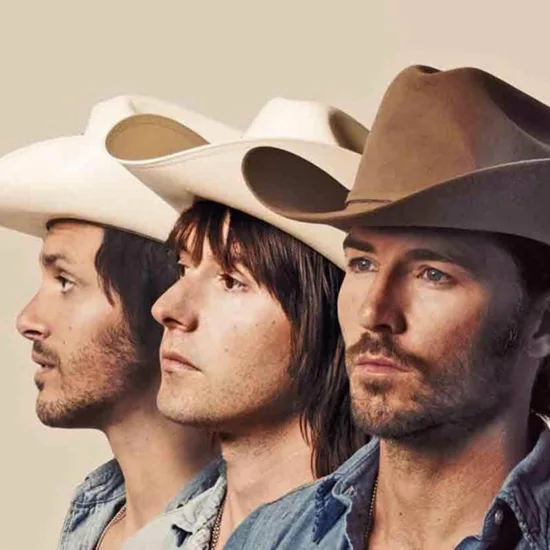
Midland and Orville Peck invite a contemporary viewer to notice how Western signs are selected and recombined. The museum’s 2025 American Currents object photography includes a Peck mask, giving one particularly concrete object a documented exhibition context.8 A mask alters the relationship between visibility and identity: it conceals part of a face while making the overall silhouette easier to recognise. That is a visual effect you can describe without speculating about private identity or motivation. Likewise, a band’s coordinated Western styling may connect its members visually without making each costume historically identical. In both cases, start with what the image shows, then distinguish your interpretation from a maker’s or artist’s documented explanation.
How to read a garment gallery
For each object, record the wearer, maker, approximate date, occasion and source of the attribution. Then ask three visual questions: what reads from a distance, what rewards a close look, and how would movement change it? Keep archival objects separate from clothes merely inspired by them. A gallery should credit the photograph as well as the garment, and avoid presenting a modern replica as the original. The women’s listening history and band identity feature connect these images back to music. Stagewear is most revealing when it sits beside the record or performance it helped frame. The goal is not to prescribe what a country fan should wear, but to understand how performers and craftspeople made a visual language together.
Sources & further reading
- Museum: Suiting the SoundDistinct Western tailors and objects.
- Museum: Nudie CohnCohn’s shop and Parsons/Manuel costume context.
- Museum oral history: ManuelFirst-person tailoring career.
- Museum: Manuel galleryStuart’s 1999 The Pilgrim costume.
- Museum: Stuart collection acquisitionStagewear as preserved historical collection.
- Museum: Stuart collection object captionsHilda Hensley’s Patsy Cline outfit.
- Museum: Twain teaching materialsCareer and image-making context.
- Museum: American Currents 2025 captionsDocumented Orville Peck mask.