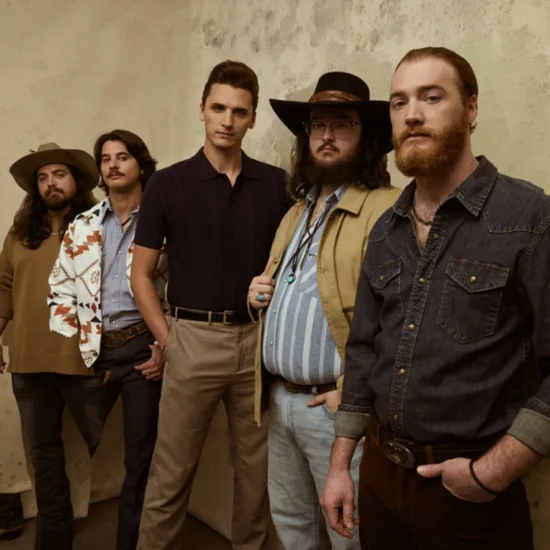
Use country-soul as a question
Country-soul here describes an editorial listening connection, not a formal new scene with agreed membership. Country and soul have a long, overlapping history; these records do not begin that exchange. The useful question is what each performance borrows, transforms or places in dialogue. A rough voice alone is insufficient evidence. Listen to whether the singer stretches a syllable behind the beat, changes the melody with a run, builds from restraint into a forceful peak, or relies on a rhythm section whose feel creates room for those decisions. The four artists below are a November 2026 selection with established released entry points. There is no claim that they have the same background, audiences, studio methods or relationship to the word soul.
Ty Myers: a guitar line can complete the phrase
Begin with Ty Myers’ “Ends of the Earth” and The Select, confirmed in his official artist material. The point of entry is the exchange between the grain of the vocal and the guitar’s melodic work. Listen to a line ending, then follow what the instrument does before the next lyric arrives. It may reinforce the feeling, redirect it or leave it unresolved. His official catalogue also provides acoustic and fuller versions of the debut material, which make a useful arrangement comparison. Do not let the notion of a young old soul replace an account of what you hear. The meaningful detail is the timing and shape of a particular performance, not the surprise of encountering that sound in a biography.1
Annotated listening path.
- Ty MyersVoice and guitar exchange
- Preston CooperRestraint-to-power song architecture
- Kashus CulpepperVocal grain inside spacious arrangements
- Red Clay StraysEnsemble dynamics around the lead voice
Read the visual as text
- Ty MyersVoice and guitar exchange
- Preston CooperRestraint-to-power song architecture
- Kashus CulpepperVocal grain inside spacious arrangements
- Red Clay StraysEnsemble dynamics around the lead voice
Preston Cooper: hear the build, not only the peak
Preston Cooper’s “Weak” and Toledo Talkin’ offer another kind of vocal scale. His official catalogue identifies both, and his artist material places them in a country-and-rock setting. A powerful high point matters because of what precedes it. Listen to the first verse’s relative restraint, the increase in pressure and the way the band helps the voice expand. If you jump directly to the most dramatic clip, you lose the architecture that makes the moment effective. Compare “Weak” with a different album track rather than treating every song as a test of maximum power. Country-soul connections can arise from controlled tension, a low phrase or a laid-back groove as much as from a rasp-filled climax.2
Kashus Culpepper: texture and an unsettled emotional centre
Start Kashus Culpepper with “After Me?” and “Who Hurt You,” then move to the released Act I. Big Loud documents the singles, their writer and producer relationships, and the album. Brian Elmquist’s production connection is therefore a concrete credit, rather than an inference from the atmosphere. Listen to how Culpepper’s vocal texture makes a direct phrase feel unstable or searching. The arrangement can leave space around that grain instead of smoothing it away. A useful second pass is to follow the pulse under the voice: does the phrase lean against a steady foundation or move together with it? Avoid calling a weathered timbre proof of a particular private experience. The record communicates through craft as well as biography.3
The Red Clay Strays: the band shapes the emotional temperature
The Red Clay Strays bring an ensemble centre to the route. “Wondering Why” and Made by These Moments are established entry points, with the latter’s RCA release documented by Sony. Listen to Brandon Coleman’s vocal in relation to the rhythm section and guitars rather than isolating its grain as the entire explanation. A restrained band can make a slight vocal expansion feel enormous; a collective rise can turn uncertainty into release. Then choose a more vigorous track to hear how the group handles momentum. The contrast matters because a single slow song can encourage a listener to imagine a narrower band than the records reveal. Shared soul references do not make this ensemble interchangeable with a solo singer supported by a different studio team.4
Four details to follow across the route
First, find the beat and notice whether the vocal sits on it, ahead of it or slightly behind it. Second, hear the beginning of a note: a clean entrance, breath or rasp changes its emotional effect. Third, notice where a melody is held steady and where the singer adds movement. Finally, follow the band through the space after a line. These are descriptive listening exercises, not a scoring system or a transcription. A singer may vary all four details within one song. If you lack musical vocabulary, write an ordinary sentence such as the voice waits while the drums keep going. That is more informative than applying soulful to every performance and then using the adjective to explain itself.
Production creates space for a voice
A record that feels organic is still shaped by microphone choices, performances, editing, balance and arrangement. There is no need to imagine a production-free recording to value the interaction you hear. Compare a released acoustic performance with a full-band track and ask what changes: harmonic support, rhythmic force, vocal distance or the duration of instrumental replies. Do not assume the acoustic version reveals a superior or more honest artist. It reveals another setting. The traditional-country guide asks similar questions about steel, swing and vocal timing, while the country-rock band route places more emphasis on guitar density and collective attack. These listening paths overlap without needing identical membership.
Build a session that rewards another listen
Choose one entry point from each artist, then return with a contrasting recording from the same catalogue. Keep the volume steady enough that a louder master does not win by default. Record one vocal detail and one instrumental detail per track. If Myers’ guitar answers are the attraction, follow that relationship; if Cooper’s builds hold you, listen to whole songs; if Culpepper’s texture stays with you, hear how different arrangements frame it; if the Strays’ collective dynamics connect, stay with an album sequence. The sound finder can suggest another direction, but a complete recording remains the best test. Country-soul is useful here because it sharpens attention, not because it supplies a new box to put artists in.
Sources & further reading
- Ty Myers official biographyThe Select, Ends of the Earth and alternate debut versions.
- Preston Cooper official musicWeak and Toledo Talkin’ released catalogue.
- Big Loud: Kashus CulpepperOfficial releases and linked credit announcements.
- Sony Music: Made by These Moments releaseAlbum release and band-recording context.